
Ebrahim Moosa | Palestine Information Network
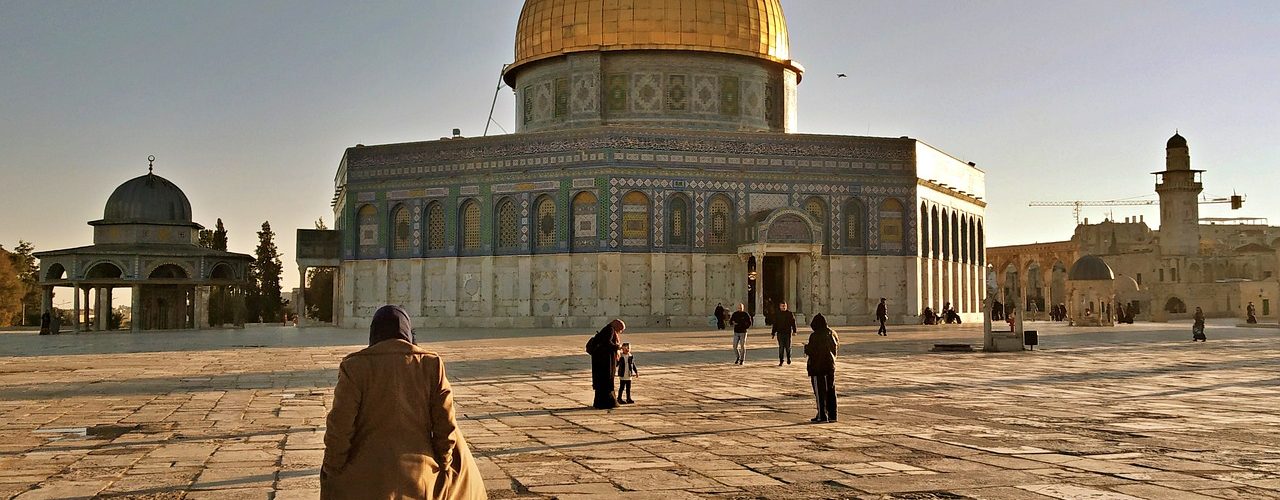
Of the responsibilities of Muslims towards Masjid al-Aqsa, one of the most critical is visiting this blessed Masjid. These are some key reasons why a visit to Masjid al-Aqsa should be on our bucket lists:
- A Sunnah and source of reward
Visiting Masjid al-Aqsa is a duty is emphasised in the Ahadeeth:
Sayyidah Maymunah bint Sa‘d رضي الله عنها relates that she asked the Prophet صلى الله عليه وسلم, “O Prophet صلى الله عليه وسلم! Inform us about Bayt al-Maqdis”? He said, “Visit it for prayer”. She further asked, “If one of us cannot visit it, what should we do”? He said, “If you cannot go for prayer then send some oil to be used in its lamps; whosoever gives oil for its lamps, will be as if he has prayed in it”. (Musnad Imam Ahmed)
Visiting is a responsibility that exists for Muslims irrespective of whether adverse political conditions or oppression reign at al-Aqsa or not. The primary reason for such visits is to please Allah سبحانه و تعالى and accrue the spiritual rewards promised for performing Salaah here.
Sayyidina Abu Hurayrah رضي الله عنه relates that the Prophet صلى الله عليه وسلم said, “You should not undertake a special journey to visit any place other than the three Masajid with the expectations of getting greater reward: the Sacred Masjid of Makkah, this Masjid of mine, and Masjid al-Aqsa”. (Sahih al-Bukhari)
Sayyidina Abu Darda رضي الله عنه relates that the Prophet صلى الله عليه وسلم said, “A prayer in Makkah is worth 100000 times, a prayer in my Masjid (Madinah) is worth 1000 times, and a prayer in al-Aqsa is worth 500 times more than anywhere else”. (Tabarani)
Visiting al-Aqsa is also encouraged for the purpose of using it as a station from which to embark upon Hajj or Umrah:
Umm Salamah, Umm al-Mu’minin رضي الله عنها , relates that the Prophet صلى الله عليه وسلم said, “If anyone puts on ihram for Hajj or ‘Umrah from the Masjid al-Aqsa and then proceeds to the sacred Masjid, his former and latter sins will be forgiven, or he will be guaranteed Paradise”. The narrator ‘Abdullah doubted which of these words he said. (Sunan Abu Dawud)
A Hadith mentions certain special duas Sayyidina Sulaymaan عليه السلام made whilst reconstructing Masjid al-Aqsa, whose blessings even contemporary visitors can share in:
Sayyidina Abdullah ibn Amr رضي الله عنه narrates that the Prophet صلى الله عليه وسلم said: “Sulaymaan, son of Dawood) prayed for three things from Allah, the Mighty and Glorious, when constructing Bayt al-Maqdis: (i) the ability to decide cases in accordance to the Will of Allah, which was granted to him; (ii) a kingdom the like of which would be given to no one after him, which was also granted; and (iii), after finishing the construction of the masjid he prayed, ‘May anyone who comes to this masjid solely for the purpose of praying in it be delivered from all his sins as on the day his mother gave birth to him’” (Nasa’i)
It is narrated of Sayyidina Ibn Umar رضي الله عنه that, in pursuit of the rewards mentioned in the aforementioned Hadith, upon completion of his devotions at al-Aqsa, he would not even drink the water of al-Quds or engage in any further activity there for fear of exceeding the conditions specified.
Motivated by a desire to earn these rewards and derive benefit from its blessedness, Masjid al-Aqsa was frequented by numerous Sahabah رضي الله تعالیٰ عنهم and has played host to many saintly personalities and general Muslim worshippers through the ages.
- Showing solidarity with the Palestinians
Sayyidina Nu’man ibn Basheer رضي الله عنه reported: The Messenger of Allah صلى الله عليه وسلم said, “The parable of the believers in their affection, mercy, and compassion for each other is that of a body. When any limb aches, the whole body reacts with sleeplessness and fever.” (Sahih al-Bukhari)
Masjid al-Aqsa is the focal point of the Palestinian struggle against dispossession, occupation and apartheid, and Palestinians – especially Jerusalemites – are the first line of defence for the Masjid. It is a common sentiment of Palestinians that the best means for fellow Muslims to assist them is to visit Masjid al-Aqsa and wider Palestine.
Such visits expose the traveller to the realities of Occupation and provide the impetus to become an ambassador for the cause upon returning to one’s home country. Critically it is a means of conveying to Palestinians that they are not alone in the struggle to maintain the Holy City’s authentic identity. These visits lift their spirits and spur them on to continue resisting and yearning for justice.
Palestinians, especially Jerusalemites, also find themselves under great financial strain due to the policies of Occupation. Visiting is a golden opportunity to support the local Palestinian economy as well as to contribute to Masjid al-Aqsa and its people.
- Warding off danger and maintaining a Muslim presence
Al-Aqsa fi Khatar (Al-Aqsa is in Danger) is not simply a slogan, but the daily reality facing the Masjid. Al-Aqsa faces plans to divide it spatially between Muslims and Jews. There are also suggestions to apportion specific prayer times for Muslims and Jews within the compound. Beyond this, the Zionist Temple Movement ultimately seeks to destroy structures at Masjid al-Aqsa and extend full control of the site in order to establish a Temple.
To complement this vision, settlers are now making provocative visits seeking to assert ownership of al-Aqsa in ever increasing numbers almost every day. 2015 Israeli Police statistics showed that Jewish visitation to al-Aqsa increased some 92 percent since 2009.
A record number of Jewish settlers have been making provocative visits to al-Aqsa over Jewish holiday periods, reflecting dramatic year-on-year increases.
An Israeli attorney who works with the Temple Movement recently stated that Israeli Prime Minister Netanyahu will have to approve prayer for Jews at al-Aqsa when their number of visitors surpasses 100 000 a year. This means no more than 300 Jews on average each day.
Concurrently, Palestinian visitation to al-Aqsa continues to be severely curtailed by Israel with authorities only allowing Muslims meeting very narrow criteria in terms of age, gender and residency status to enter. Palestinians who live barely a few minutes or kilometres away from Masjid al-Aqsa may never get to enter the Masjid in their lifetimes.
The Apartheid Wall, expanding Jewish settlements, house demolitions, banning orders, permits and checkpoints too are together keeping yet more Palestinians out. And in the wake of the Trump administration’s recognition of Jerusalem as Israel’s capital, legislation, demographic engineering and archaeological efforts to erase Muslim heritage from al-Aqsa are now all proceeding at break-neck speed.
Since such a limited number of Palestinians are allowed to visit al-Aqsa and hardly any Muslims from the Arab World are able to visit, a special responsibility is consequently placed on Muslims from South Africa, the United Kingdom, Turkey and other Muslim-minority countries to visit, in order to uphold a Muslim presence particularly in al-Quds and al-Aqsa. From South Africa, no visas are required and travel arrangements can be made easily.
Visiting entails one simply travelling to the Masjid, enjoy its spiritual fruits and interacting with its people! Being a holder of a foreign passport and a peaceful traveller largely immunises one from any adversarial encounters with soldiers of authorities.
Performing I’tikaaf in Ramadan at Masjid al-Aqsa is a truly memorable experience that is open to all. Beyond Ramadan, visitation is required throughout the year – from families, youth, Ulama, Umrah travellers, researchers, professionals and more.
Visiting Masjid al-Aqsa is a responsibility we should all take seriously. More than much else, what al-Aqsa needs right now is simply our presence!
May Allah سبحانه و تعالى increase our love and yearning for Masjid al-Aqsa. May He allow us all to visit its blessed environs before our deaths. May He ease the suffering of its people. And may we see its freedom in our lifetime. Aameen


