
02 May 2018
A Jerusalem Magistrate’s Court Judge ruled in March hat Jews can pray at the gates of Masjid al-Aqsa. The ruling came in the context of Israeli police distancing three 14-year-old Jewish girls from the Al-Aqsa area as they prayed near its gates.
In his decision, Justice Herbst ruled that the right of young Jewish women to pray at the gates was no less than the right of the Arabs and that police should allow the young women’s prayers.
The three girls were detained after praying at the al-Aqsa gates and police requested they be distanced from the area, stating their prayers and presence with a prayer book at the entrance to the Masjid could spark violence.
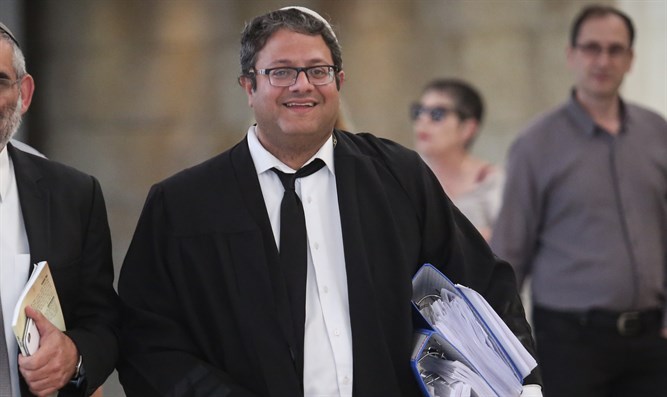
Attorney Itamar Ben-Gvir argued in court that police violated the young women’s freedom of worship and discriminated against them. Ben-Gvir also presented an extensive Israeli ruling on freedom of worship and individual rights in the State of Israel.
In his decision, the judge ruled that “it is the right of every person to pray in the State of Israel on the streets of a city, provided this does not violate the rights of others. So it is in Jerusalem, so it is in Eilat, in Tel Aviv, in Haifa, and everywhere in the State of Israel.”
The judge added, “There is indeed considerable traffic in the Bab al Huta lane – one of the gates of the Temple Mount [al-Aqsa] – when there is Muslim prayer on the Mount, and that is good; there’s no better proof of the State of Israel’s strictness in its legislation and court rulings of freedom of religion and worship.
“I don’t see how the defendants could violate freedom of worship of the other area citizens and residents. Every citizen has their own rights. The police representative’s argument that throwing of objects would have resulted from the young women’s presence is unacceptable to me, as I wouldn’t have accepted the claim that a man with a wallet full of cash walking in a neighborhood where many pickpockets live violates public safety and invites offenses,” the judge noted, adding that the police camera recording of the incident showed that one of the Muslim female worshipers pushed one of the Jewish girls and was not arrested.
At the end of his decision Judge Herbst ruled that the Border Policemen acted properly in guarding the minors, and there was no reasonable suspicion the young women committed a criminal offense. Therefore, there was no place for them to be distanced from the al-Aqsa gates. “Our Father Abraham, the father of both Jews and Muslims, established the morning prayer. The video before us documents the children of Abraham, both Jews and Muslims, each at his own prayer. The police must allow this standing for all of Abraham’s children.”
Ben-Gvir said this morning, “It’s very sad that we were forced to hold a hearing on the right of Jews to pray in the Old City of Jerusalem, but I’m pleased Justice Herbst conveyed an unequivocal message to the police. We are facing a slippery slope. First the police claimed Jews are forbidden to pray on the Temple Mount [al-Aqsa]. Now, according to the police, it’s forbidden to pray in the Old City, because it may also annoy Arabs. If Judge Herbst hadn’t stopped it here, the next stage would be that Jews wouldn’t be allowed to pray in the Ben Yehuda pedestrian mall. The court’s decision unequivocally states police have no authority to prevent prayer, and it’s to be hoped the police will internalize and implement the decision.”
In response to the court’s ruling, Chairman of the Higher Islamic Council in Jerusalem, Sheikh Ekrema Sabri, said: “Al-Aqsa Mosque is a holy site for Muslims only and the court’s ruling is irresponsible and illegal and we will not abide by it.”
He also stressed that Al-Aqsa Mosque is not subject to the decisions of the Israeli occupation or the rulings of the occupation’s courts.
SOURCE: Arutz Sheva | Middle East Monitor (with editing by MasjidalAqsa.net)


